In this article
- Introduction
- Common Fertility Challenges Faced by Women and Men
- How Chinese Medicine Views Fertility
- TCM Treatments That Support Fertility
- How TCM Supports Female Fertility
- How TCM Supports Male Fertility
- TCM Alongside IVF, IUI and Fertility Treatment
- Chinese Medicine in Pregnancy and Prenatal Support
- When to Start TCM for Your Fertility Journey
- FAQs About Chinese Medicine and Fertility
- About the Author
- References
How Chinese Medicine and TCM Support Fertility and Pregnancy in Malaysia
Written and medically reviewed by Physician Yuan Ting
Last Updated: 29 June 2026
Reading Time: 12 Minutes
Introduction
Many couples exploring Chinese Medicine for Fertility in Malaysia come across Traditional Chinese Medicine at some point in their fertility journey. Some are newly trying to conceive and want to understand all their options. Others are already in medical treatment and looking for additional ways to support their body. A few have been on this journey for a long time and are open to any approach that may help.
Chinese medicine supports fertility by promoting hormonal balance, improving circulation to the reproductive organs, and addressing the body’s internal patterns linked to reproductive health. It is offered as complementary support alongside conventional fertility treatment, including IVF and IUI.
According to the World Health Organization, approximately 1 in 6 people worldwide experience infertility at some point in their lives. In Malaysia, data from the National Population and Family Development Board (LPPKN) shows that Malaysia’s total fertility rate stood at 1.6 births per woman in 2024, below the replacement level of 2.1 for more than a decade. In response, the government launched the BuAI initiative (Fertility Treatment Assistance and Infertility Advocacy) in 2025 to address the growing need for fertility support across the country.
Medical specialists at fertility centres manage the clinical procedures and diagnosis. At the same time, the body’s internal condition, including hormonal balance, circulation, and stress levels, plays a role in reproductive health. TCM focuses on supporting this internal foundation as a complement to medical care.
At Xi Fertility & Women’s Health TCM Centre, our KKM-registered TCM practitioners have been supporting couples throughout their fertility journeys since 2013. Every treatment plan is personalised based on an individual TCM assessment and can be integrated with natural conception, IVF, IUI, or other fertility treatment plans.
- If you are new to TCM: Start with the sections on how TCM views fertility and which treatments are used.
- If you already have a diagnosis:Skip ahead to the treatment and complementary support sections.
Common Fertility Challenges Faced by Women and Men
Fertility challenges are more common than many couples realise, and they are not solely a female concern. A medical assessment is the first step in identifying the specific cause. Understanding the most common contributing factors helps clarify where TCM support may be relevant.
Different treatments come with varying estimated costs in Malaysian Ringgit.
| Common Factors Contributing to Women’s Infertility | Common Factors Contributing to Men’s Infertility |
|---|---|
|
|
How Chinese Medicine Views Fertility
Traditional Chinese Medicine does not treat fertility as a single isolated condition. A TCM practitioner assesses the body’s overall internal balance, looking at how different organ systems are functioning together, before developing an individualised care plan.
Three organ systems are most closely linked to reproductive health in TCM:
- Kidney: Stores the body’s reproductive energy and foundational reserves. Kidney function is closely tied to hormonal balance, menstrual regularity, and reproductive capacity in both men and women.
- Liver: Regulates the smooth flow of Qi (energy) and blood. Disruptions linked to chronic stress, emotional load, or poor circulation can affect menstrual cycles, ovulation, and sperm health.
- Spleen: Responsible for producing blood and nourishing the body. Its function affects the quality of blood available to support the uterus, ovaries, and reproductive condition.
A TCM assessment extends beyond the reproductive system alone. Sleep quality, digestion, cycle regularity, energy levels, stress load, and physical constitution are all reviewed, as these factors are understood as connected to reproductive health in Chinese medicine.
Common TCM Patterns Linked to Fertility
In TCM, a pattern diagnosis describes the specific internal imbalance a practitioner identifies based on a full assessment, including cycle history, symptoms, lifestyle, tongue, and pulse. The four patterns below are most frequently identified in a fertility context.
| Pattern | Typical Presentation |
|---|---|
| Kidney Deficiency | Associated with symptoms such as lower back soreness, fatigue, irregular cycles, and reduced body reserves in both men and women. |
| Liver Qi Stagnation | Associated with PMS, cycle irregularities, emotional tension, and impaired circulation. |
| Blood Deficiency | Associated with light periods, fatigue, pale complexion, and reduced blood flow to the uterine lining. |
| Dampness and Phlegm | Associated with PCOS/PMOS-related hormonal patterns, weight-related imbalance, and sluggish circulation. |
Each pattern is described by its symptoms and physical presentation. These are starting points for a personalised practitioner assessment, not a self-diagnosis checklist.
TCM Treatments That Support Fertility
Chinese medicine uses several treatment modalities for fertility support. A practitioner recommends a combination based on individual assessment findings.
Acupuncture for Fertility
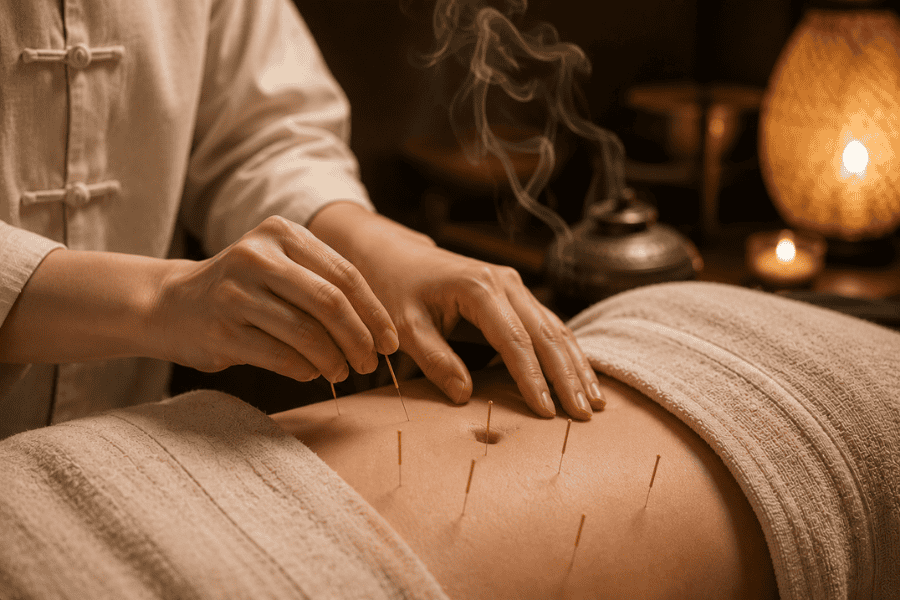
Acupuncture involves the placement of fine needles at specific points on the body to support the flow of Qi and blood. In a fertility context, acupuncture is used to support hormonal balance, blood circulation to the reproductive organs, and the body’s stress response.
A Malaysian MOH (MaHTAS) technology review found acupuncture showed potential to improve clinical pregnancy rates in women undergoing IVF, though it noted the supporting evidence was of low-to-moderate quality.
Acupuncture sessions are timed in relation to the menstrual cycle phase or, for couples in IVF or IUI treatment, aligned to the stages of the clinical timeline.
Chinese Herbal Medicine for Fertility
Herbal formulas in TCM are prescribed individually based on each patient’s pattern assessment. They are not general supplements. A practitioner selects and adjusts the formula at each TCM consultation based on how the body is responding and where the patient is in their cycle or treatment timeline.
Examples of herbs commonly used in fertility formulas
| Herb | Traditional Role in Fertility Support |
|---|---|
| Dang Gui (Angelica sinensis) | Nourishes and moves Blood; used to support menstrual regularity and cycle health. |
| Bai Shao (White Peony root) | Nourishes Blood and softens the Liver; eases cramping and tension. |
| Shu Di Huang (Prepared Rehmannia) | Tonifies Kidney essence and Blood; a foundational reproductive tonic. |
| Tu Si Zi (Cuscuta chinensis) | Supports Kidney Yang and Yin; used for both female and male fertility. |
| Dang Shen (Codonopsis pilosula) | Tonifies Qi and the Spleen to support Blood production and energy. |
| Gou Qi Zi (Lycium barbarum / L. chinense) | Nourishes Liver and Kidney essence; associated with egg and sperm quality support. |
| Xiang Fu (Cyperus rotundus) | Moves Liver Qi and regulates menstruation; used for cycle irregularities linked to stress or emotional strain. |
| Dan Shen (Salvia miltiorrhiza) | Promotes blood circulation and reduces stasis; used to support circulation to the reproductive organs. |
| Yin Yang Huo (Epimedium) | Tonifies Kidney Yang; used for cold-pattern fertility concerns and to support male reproductive function. |
| Wu Wei Zi (Schisandra chinensis) | Preserves Kidney essence and supports overall vitality; used for patterns of deficiency affecting fertility. |
*Caution: Herbal formulas are prescribed and adjusted by a qualified TCM practitioner based on an individual assessment. These herbs are not suitable for self-prescription. Certain herbs, including Dang Gui and Dan Shen, may not be suitable during pregnancy or for individuals with hormone-sensitive conditions or those taking blood-thinning medications. Always consult a qualified TCM practitioner before taking herbal medicine.
A study on Chinese herbal medicine for women with low ovarian reserve found live birth rates of 32 percent in the herbal medicine group and 42 percent where IVF and herbal medicine were used together. Individual outcomes may vary based on age, diagnosis, and treatment plan.
Herbal medicine is used to support hormonal regulation, nourish blood, support circulation, and address the specific TCM pattern identified during assessment.
Moxibustion
Moxibustion applies heat from burning dried mugwort (moxa) near specific acupuncture points. In fertility support, it is used to address patterns associated with cold or deficiency, particularly to support warmth and circulation in the lower abdomen.
Cupping Therapy
Cupping uses suction cups placed on the skin to support circulation and release tension. In a fertility context, it is used as a complementary treatment alongside acupuncture and herbal medicine to support blood flow and ease physical stress load.
Every plan at Xi Fertility begins with a personalised pattern assessment.
How TCM Supports Female Fertility
Chinese medicine approaches female fertility by looking at the menstrual cycle as a key indicator of internal balance. A regular, pain-free cycle with adequate flow is considered a sign of healthy Qi and blood. Disruptions to this pattern are treated as signals to investigate further.
A TCM programme for women is tailored to the individual and may cover the following areas:
| Area | How TCM May Support It |
|---|---|
| PCOS and Ovulation Irregularities (PCOS/PMOS) | A TCM programme for PCOS/PMOS normally combines herbal medicine, acupuncture, and dietary guidance to support hormonal balance and more regular ovulation, targeting TCM patterns such as Liver Qi stagnation and Dampness. |
| Menstrual Cycle Regulation | Cycle length, flow quality, and period pain are assessed and addressed. A well-regulated cycle supports conception readiness. |
| Endometrial Support | Herbal tonics and acupuncture are used together to support blood circulation to the uterine lining, as preparation for conception or an IVF transfer cycle. |
| Follicular Phase Support | Treatment during the follicular phase focuses on supporting blood flow and nourishment to the developing follicles. |
| Stress and Emotional Wellbeing | Acupuncture, herbal medicine, and lifestyle guidance aim to reduce the physical impact of sustained stress during the fertility journey. |
How TCM Supports Male Fertility
Male factor infertility contributes to approximately half of all infertility cases and is the sole cause in around 20 to 30 percent. Sperm health is shaped by circulation, hormonal balance, and overall physical condition, all of which TCM addresses as part of an individualised programme.
Sperm takes approximately 72 to 74 days to complete its full development cycle. Changes to lifestyle, treatment, or body condition need at least three months to meaningfully influence sperm parameters. Starting TCM early, ideally three months before a planned IVF or IUI cycle, gives this process adequate time.
| Area | How TCM May Support It |
|---|---|
| Sperm health | Acupuncture and herbal medicine are commonly incorporated into personalised TCM programmes to support circulation and overall reproductive health during the sperm development cycle. |
| Hormonal Balance | TCM patterns linked to low energy, reduced libido, and hormonal imbalance are assessed and addressed through personalised herbal formulas. |
| Lifestyle and Dietary Guidance | Diet, sleep quality, stress management, and heat exposure may all influence male reproductive health. Lifestyle recommendations are often included as part of a broader fertility support programme. |
| Stress Management | Chronic stress has been associated with changes in reproductive hormone levels. Acupuncture may help support the body’s stress response and overall wellbeing during fertility treatment. |
Fertility is a two-partner journey. Talk to our TCM specialists together.
TCM Alongside IVF, IUI and Fertility Treatment
Many couples preparing for fertility treatment incorporate TCM as complementary support alongside their clinical care. TCM does not replace IVF, IUI, or ICSI. It is an additional layer of support for the body during a physically and emotionally demanding process.
Several studies have explored the use of TCM alongside IVF treatment. Some studies found that women who received a whole-systems TCM programme (combining acupuncture, herbal medicine, and moxibustion) alongside IVF reported live birth rates 27 percent higher than those receiving IVF alone.
A further study on infertile women undergoing a second round of IVF combined with TCM treatment reported meaningful improvements in both pregnancy and live birth rates. . Once pregnancy is confirmed, many couples ask whether TCM support can continue.
How TCM Supports Different Stages of Fertility Treatment
The role of TCM may vary depending on the stage of treatment and each individual’s needs. The table below outlines some of the common areas where TCM is incorporated as complementary support alongside fertility treatment.
| Aspect of Fertility Treatment | How TCM May Support It |
|---|---|
| Pre-Cycle Preparation (Women) | Herbal medicine and acupuncture are used to support hormonal balance, egg development, and uterine lining ahead of a planned IVF or IUI cycle. |
| Sperm Preparation (Men) | Herbal medicine and acupuncture are used to support the sperm development cycle. Starting at least three months before a planned cycle gives the process adequate time. |
| Hormonal Balance | TCM assessment and treatment aims to support the body’s hormonal environment throughout a fertility cycle. |
| Side Effect Management | Acupuncture and dietary guidance may help manage common symptoms such as bloating, fatigue, and stress during treatment. |
| Emotional Wellbeing | Acupuncture and lifestyle support aim to reduce stress and support sleep quality during a demanding process. |
| Post-Transfer Care | TCM approaches after embryo transfer focus on supporting the body’s internal balance and overall wellbeing. |
Conventional treatment addresses the clinical process directly; TCM supports the body’s condition in preparation for and during that process. The two approaches work at different points in the same journey. For more, see our guide on building a strong IVF foundation with TCM.
Chinese Medicine in Pregnancy and Prenatal Support
Once pregnancy is confirmed, TCM can continue to play a supportive role at each stage. The focus shifts from pre-conception preparation to supporting the body through the physical demands of pregnancy.
- First Trimester: Acupuncture and dietary guidance are used to manage common symptoms such as nausea and fatigue, supporting the body through early pregnancy adjustment.
- Second Trimester: As the pregnancy progresses, the focus of TCM care shifts toward energy and blood nourishment. Supporting circulation and maintaining internal balance are the main considerations during this period.
- Third Trimester: Treatment approaches are adjusted to support the body’s preparation for birth, reflecting the specific needs of late pregnancy.
Important Safety Note:
Always inform your doctor, gynaecologist, or obstetrics specialist before starting or continuing any TCM treatment during pregnancy. Certain acupuncture points and herbal ingredients are avoided during pregnancy and require assessment by a qualified TCM practitioner. Self-medication with herbal products during pregnancy is not advised.
Continuing TCM through pregnancy? Start with a practitioner-led assessment.
When to Start TCM for Your Fertility Journey
The right time to start TCM depends on where you are in your fertility journey.
- Trying to conceive naturally: Beginning TCM three to six months before actively trying to conceive allows time to support hormonal balance, menstrual cycle regularity, and overall reproductive health.
- Before IVF or IUI: Starting at least three months before a planned cycle is recommended, aligning with the 74-day sperm development cycle for men and allowing time to support follicle development in women.
- During an active treatment cycle: TCM can be incorporated during IVF or IUI as adjunct support, with session timing adjusted to the clinical timeline.
- After embryo transfer: TCM support focuses on overall body balance and wellbeing during the two-week wait and beyond.
TCM fertility support may be suitable for:
- Couples trying to conceive naturally for the first time
- Couples preparing for IVF, IUI, or ICSI
- Couples who have experienced repeated cycle failures or recurrent implantation issues
- Women with PCOS/PMOS, irregular cycles, or endometriosis
- Men with identified sperm parameter concerns
- Couples with unexplained infertility
Xi Fertility Centre has supported couples across Kuala Lumpur and the Klang Valley since 2013. Our KKM-registered practitioners provide personalised TCM programmes based on individual pattern assessment.
If you are ready to take the next step, our team is available for an initial consultation at our centres in Damansara Heights, Petaling Jaya, Bukit Jalil, and Setia Alam. Book an appointment here.
FAQs About Chinese Medicine and Fertility
1. How does Chinese medicine help with fertility?
Chinese medicine supports fertility by improving the body’s internal balance through acupuncture, herbal medicine, moxibustion, and cupping therapy. Acupuncture supports hormonal regulation and blood circulation to the reproductive organs. Herbal medicine is prescribed individually based on each patient’s TCM pattern assessment. TCM works as complementary support alongside conventional fertility treatment, not as a replacement for it.
2. How long does TCM take to support fertility and conception?
A TCM fertility programme runs for three to six months. Sperm takes 72 to 74 days to complete its full development cycle and follicle development takes approximately 90 days, meaning changes to body condition need at least three months to take meaningful effect. Starting TCM at least three months before a planned IVF or IUI cycle is recommended. Results vary by individual.
3. Can Chinese herbal medicine be taken alongside IVF treatment or fertility medication?
Herbal medicine can be incorporated alongside fertility treatment, but a TCM practitioner must review your full treatment plan, including your medication and stage of the IVF cycle, before prescribing a formula. Certain herbs may need to be paused or adjusted at specific points. Always inform both your medical doctor and your TCM practitioner about all treatments you are taking so both plans can be coordinated safely.
About the Author
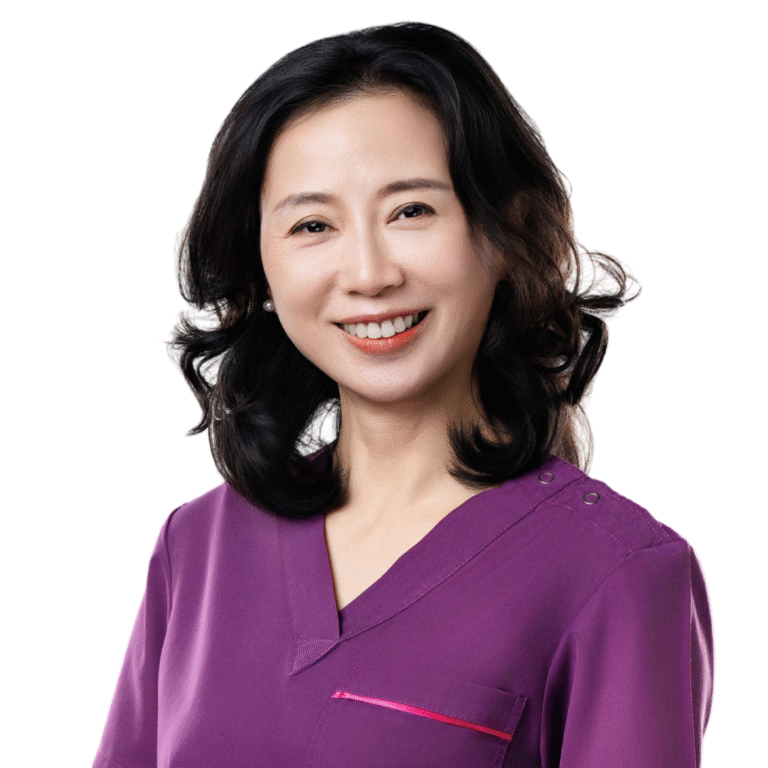
Physician Yuan Ting (B.ChinMed)
Founder & TCM Fertility Expert
Physician Yuan Ting is the Founder and Head of Practitioners at Xi Fertility & Women’s Health TCM Centre. With formal clinical training in Gynecology and Fertility from the prestigious Chengdu University of Traditional Chinese Medicine (CDUTCM), she brings over a decade of expertise to holistic reproductive health. Physician Yuan Ting specializes in pre-IVF body preparation and supporting couples who have experienced recurrent IVF failures. Her core clinical philosophy bridges Western ART and traditional wisdom: a successful IVF journey is not just about trying more cycles, but about ensuring the body’s internal environment is optimally balanced and prepared for conception.
- World Health Organization. (2023). 1 in 6 people globally affected by infertility: WHO. Available at: https://www.who.int/news/item/04-04-2023-1-in-6-people-globally-affected-by-infertility
- National Population and Family Development Board (LPPKN). (2025). Low fertility, high stakes: demographic and economic implications of Malaysia’s fertility decline. Scientific poster presented at PERKKS25. Available at: https://familyrepository.lppkn.gov.my/index.php/database_stores/store_view_page/56/941?link=Ij9saW5rPUlqOXJaWGxmZEhsd1pWOHdQV1Y0WVdOMEptdGxlVjh3UFVWa2RXTmhkR2x2YmlJJTNEJmtleV90eXBlXzA9ZXhhY3Qma2V5XzA9RmVydGlsaXR5Jmdyb3VwaW5nPUltVnVkVzFmYzJWc1pXTjBhVzl1Y3k1SlZFVk5WRmxRUlM1RVFsTkVSVVpCVlV4VUlnJTNEJTNEJmFscGhhYmV0PUFsbCI=
- BERNAMA. (2025). BuAI initiative launched to address fertility decline and infertility in Malaysia. Available at: https://bernama.com/en/news.php?id=2455546
- Ministry of Health Malaysia. (2023). Acupuncture as an adjunct treatment in subfertility. Health Technology Assessment Section (MaHTAS). Available at: https://www.moh.gov.my/images/04-penerbitan/penerbitan-klinikal/mahtas/FR%20-%20Acupuncture%20as%20an%20adjunct%20treatment%20in%20subfertility_compressed.pdf
- Leslie, S.W., et al. (2024). Male Infertility. Available at: https://www.ncbi.nlm.nih.gov/books/NBK562258/
- Martins da Silva, S., & Anderson, R. A. (2022). Reproductive axis ageing and fertility in men. Available at: https://pmc.ncbi.nlm.nih.gov/articles/PMC9789007/
- Wu, M. H., Wang, S. C., Su, P. F., Tsai, L. M., Chen, P. M., Li, C. J., Wu, H. J., & Chang, C. H. (2025). Effect of Chinese Herbal Medicine on Pregnancy Outcomes in IVF Patients with Low Ovarian Reserve: A Predictive Model. Available at: https://pmc.ncbi.nlm.nih.gov/articles/PMC12471412/
- Song, J.Y., et al. (2023). Impact of whole-systems traditional Chinese medicine therapy on in vitro fertilization and embryo transfer outcomes: A retrospective cohort study. Available at: https://www.sciencedirect.com/science/article/abs/pii/S1876382023000227
- Wang, S., et al. (2025). The Effectiveness of Live Birth Rate of Traditional Chinese Medicine Intervention for Infertile Women Undergoing a Second Round of IVF Is Influenced by Age. Available at: https://pubmed.ncbi.nlm.nih.gov/40294989/